

News
- by Ben Nedas
Understanding grass varieties: implications for horse digestibility and sugar content
When managing pastures for horses, the choice of grass species is crucial due to varying digestibility and sugar content, which can significantly impact equine health. This blog explores various European grass varieties, focusing particularly on the issues associated with rye grass, a common pasture choice which is far from ideal for horses.
- by Ben Nedas
Spring Grass Alert: How to Safeguard Your Horse’s Digestive Health
As the season shifts, horse owners face the challenge of managing the fresh growth of spring grass, which can significantly impact a horse’s health. In a detailed Facebook post, Tom Beech, also known as the Osteopathic Vet, provides essential guidance on the potential effects of spring grass on equine well-being, particularly focusing on the hindgut.
- by Ben Nedas
Harnessing the power of the equine gut microbiome for optimal health and performance
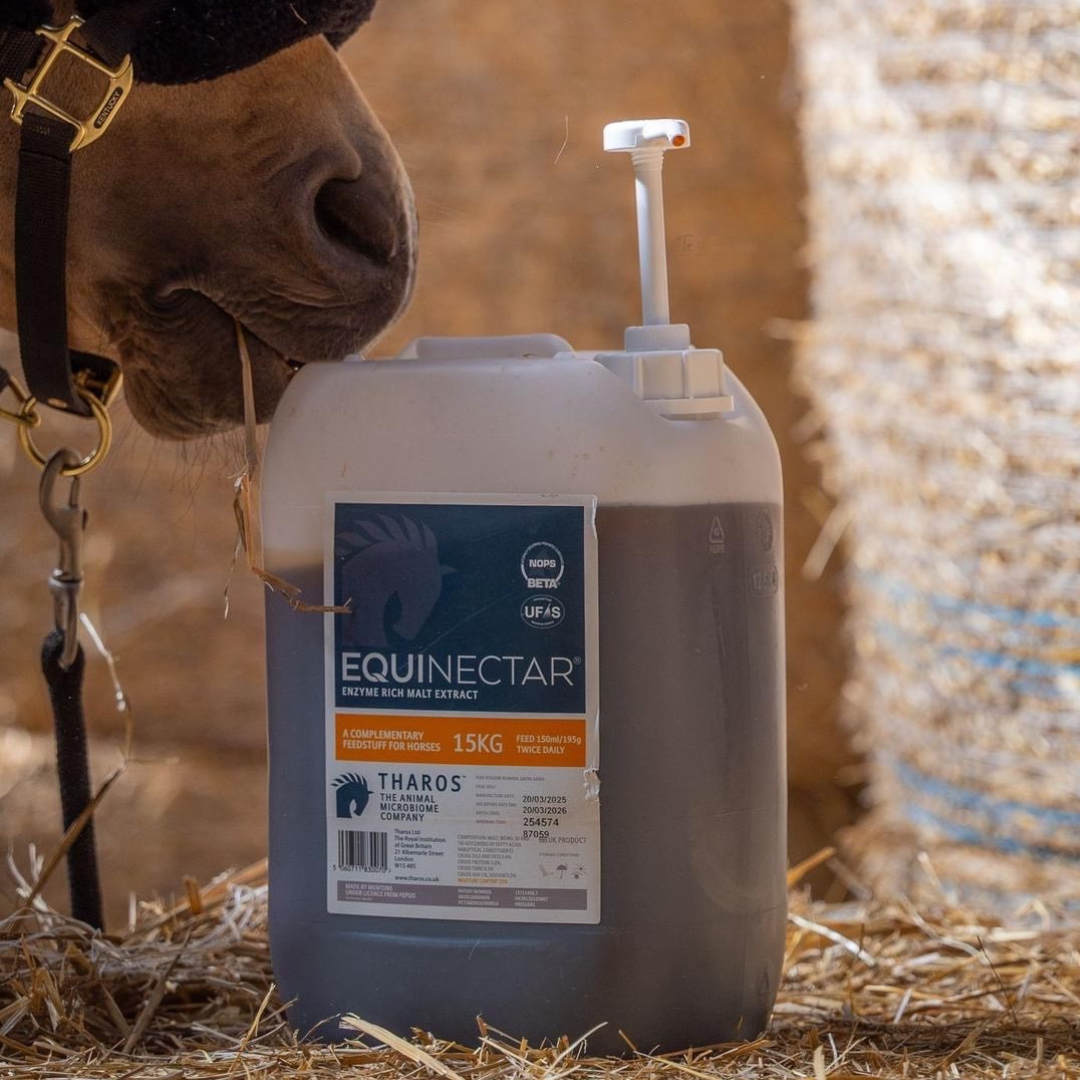
The gut microbiome, a complex and dynamic community of microorganisms, plays a crucial role in the overall health and functionality of its host. In horses, understanding the gut microbiome has become a pivotal aspect of veterinary science, with research highlighting its influence not only on physical health but also on performance, behaviour, and emotional well-being. This blog aims to discuss the equine gut microbiome and provide practical insights for horse owners to optimise their management strategies.

- by Eleni Makraki
When I adopted Bonner, a retired 10-year-old racehorse, I knew transitioning him from the racetrack to a more relaxed lifestyle would be challenging. Having been ‘hot’ and high-spirited, Bonner struggled with grumpiness and discomfort, especially during grooming. Despite various supplements, his behavioural issues persisted until we introduced EquiNectar into his routine.

- by Eleni Makraki
Mouse, an 18.1hh Irish Sports Horse, had been struggling to gain any weight since his arrival from Ireland. His body condition was poor, and despite various diets, nothing seemed to help. Over time, he became increasingly anxious and turned into a ‘fire-breathing dragon’ in the school during winter. Within four weeks of starting on EquiNectar, Mouse was transformed. Now, three months later, we haven’t looked back. I have a completely changed horse.
- by Ben Nedas
Spring Fever in Horses: Understanding and Managing Seasonal Changes
Spring brings a mix of warm and cold days, often sprinkled with rain, lengthening the days and allowing more time for equestrian activities. However, this season can also introduce certain challenges, notably the phenomenon known as ‘spring fever’ in horses.