

Researchers at Lincoln Memorial University's College of Veterinary Medicine have published a comprehensive review of the role of short-chain fatty acids (SCFAs) in equine gut health, with a particular focus on their connection to colic — one of the most serious and frequently occurring conditions in horses.
What the paper covers
SCFAs — primarily acetate, propionate, and butyrate — are produced in the hindgut when beneficial bacteria ferment dietary fibre. The paper explains in detail how these molecules maintain gut wall integrity, regulate immune function, and suppress inflammation. Crucially, it traces the pathway by which disruption to SCFA production — caused by high-starch or low-fibre diets, stress, or microbial dysbiosis — can contribute directly to colic pathophysiology.
The authors identify dietary starch overflow and fructan fermentation as key triggers for dysbiosis, which in turn reduces SCFA output, increases gut permeability, and creates the conditions for systemic inflammation. The paper also reviews strategies to restore SCFA production, including high-forage diets, prebiotic and probiotic supplementation, and emerging approaches such as fecal microbiota transplantation.
Why we're sharing it
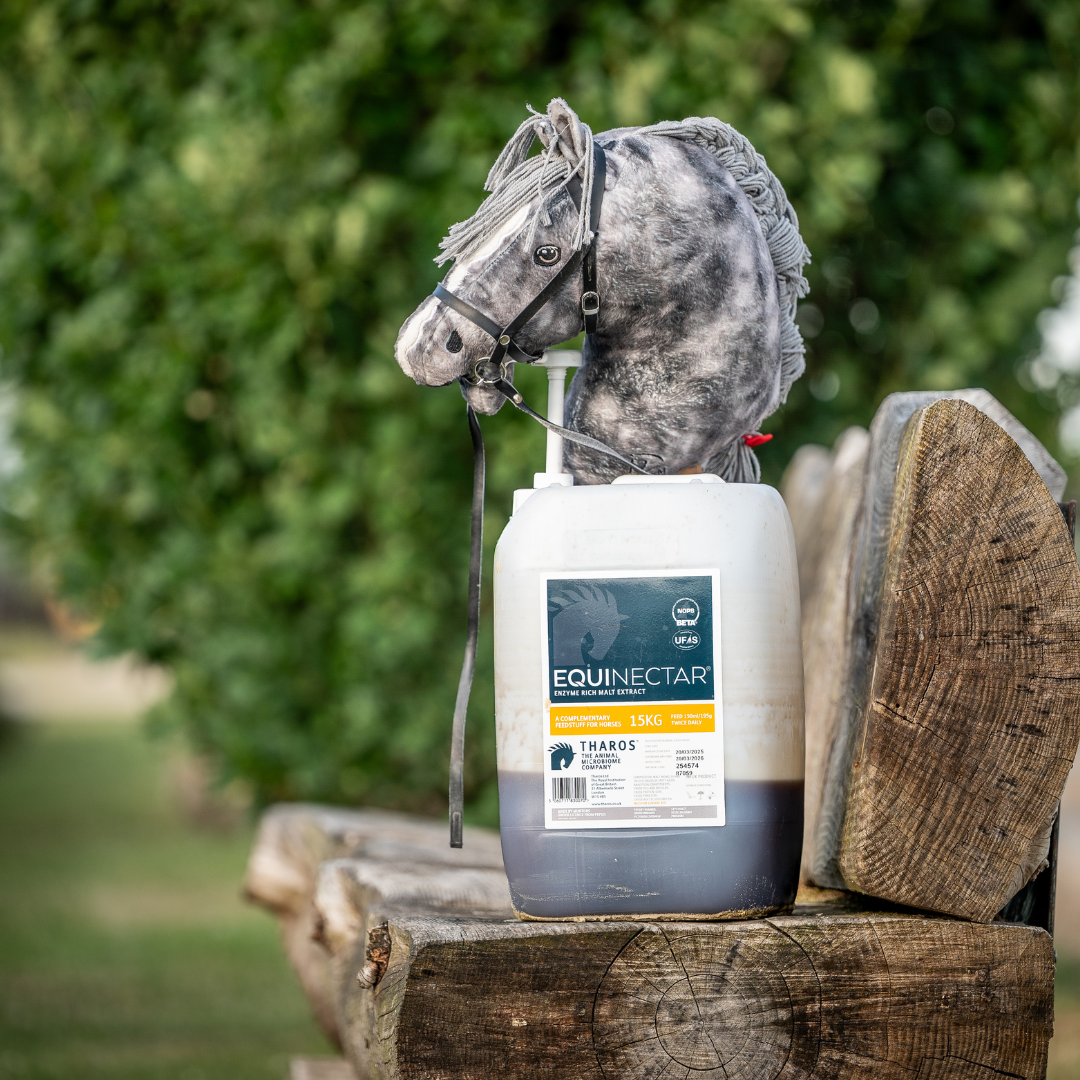
This paper was not conducted by, or in association with, Tharos. We're sharing it because it provides some of the clearest and most up-to-date independent scientific context for understanding why hindgut health matters — and why the mechanism by which EquiNectar works is relevant to some of the most serious challenges facing horse owners today.
The paper is open access and freely available in full via the link below.